How to Fix a Stove That Keeps Tripping the Circuit Breaker
Loading content…
Loading content…


You’re in the middle of preparing dinner, the stovetop is on, and suddenly—click—everything goes dark and silent. Your stove has tripped the circuit breaker again. It’s a frustrating and surprisingly common problem that can bring your kitchen to a complete halt. Not only is it inconvenient, but it can also be a sign of a serious electrical issue.
The good news is that you can often get to the bottom of the problem yourself with a bit of systematic troubleshooting. A stove that keeps tripping the breaker is usually caused by one of a few common culprits: an overloaded circuit, a faulty component in the stove, or a weak circuit breaker.
Here at Casa, we believe in empowering you to handle home maintenance with confidence. We’ll walk you through this issue just like we were on the phone with you, starting with critical safety checks and moving through the diagnostic steps for both electric and gas stoves. Let's figure this out together and get your kitchen back up and running.
Before we dive into any troubleshooting, we need to talk about safety. Electrical issues are not something to take lightly. Any time a circuit breaker trips, it's doing its job by protecting your home from a potential fire hazard. The first thing you need to do is a quick safety assessment.
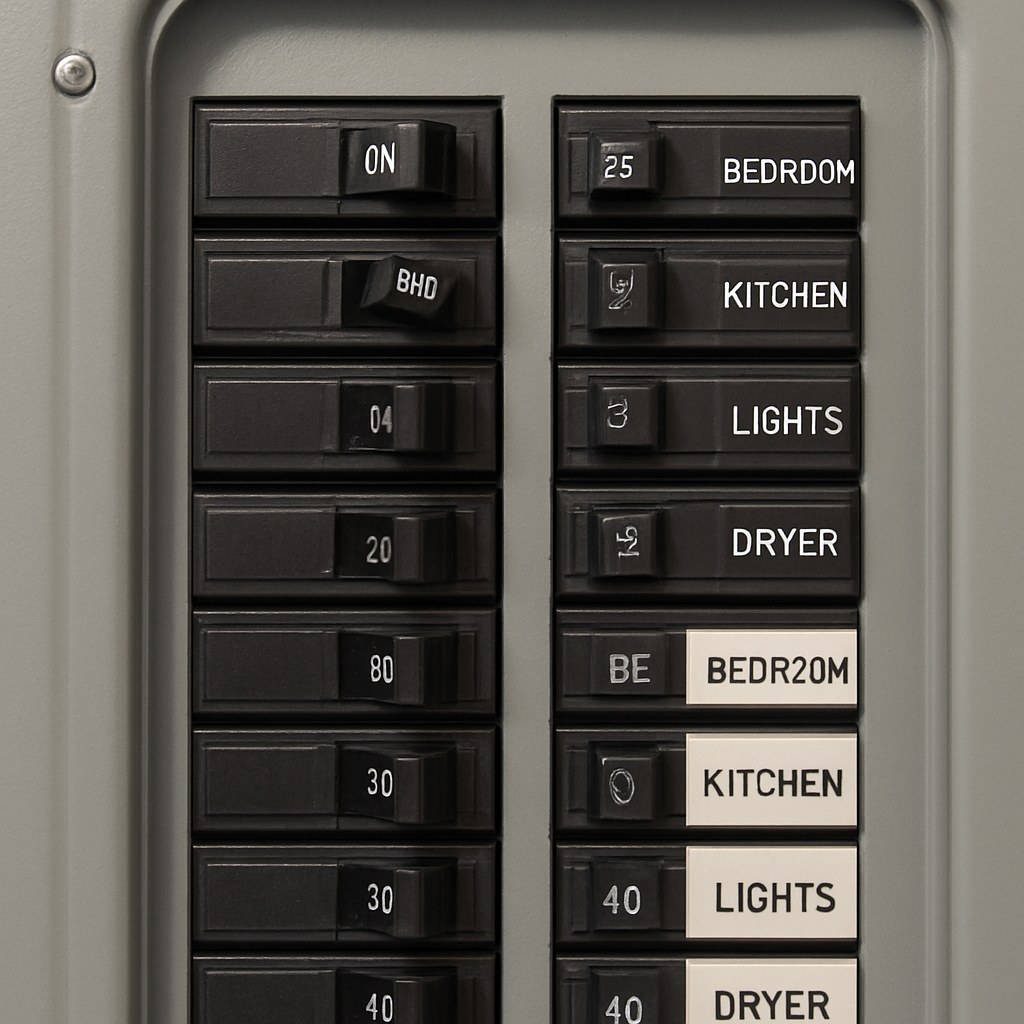
Follow these steps before you do anything else:
If you answered YES to any of these checks—if you feel excessive heat, smell burning, or see scorch marks—STOP immediately. Do not attempt to reset the breaker or troubleshoot further. Call a licensed electrician right away. These are signs of a dangerous electrical fault that requires professional attention.
If everything seems normal, you can proceed with the troubleshooting steps below.
Understanding what might be wrong is the first step toward fixing it. Here are the most frequent reasons a stove will trip a circuit breaker:
Now, let's get hands-on and figure out what’s causing your issue.
This is the first fork in the road, as the electrical systems and potential problems are quite different. If you're not sure, here’s how to tell:
Once you know your stove type, follow the appropriate path below.
If you've determined you have an electric stove, let’s isolate the problem.
Rule Out an Overloaded Circuit: Is anything else plugged into outlets near the stove? Even if they're not on the same visible outlet, they could be on the same circuit. Unplug everything else on that circuit (microwaves, coffee makers, etc.). Now, go reset the breaker (push it firmly to OFF, then to ON). Try turning on just one stove heating element to LOW. If the breaker holds, you've found your problem: the circuit was overloaded. The long-term solution is to keep your stove on its own dedicated circuit. If it still trips, move to the next step.
Test for a Faulty Heating Element: A bad element is a very common culprit. We can test this by isolating each one.
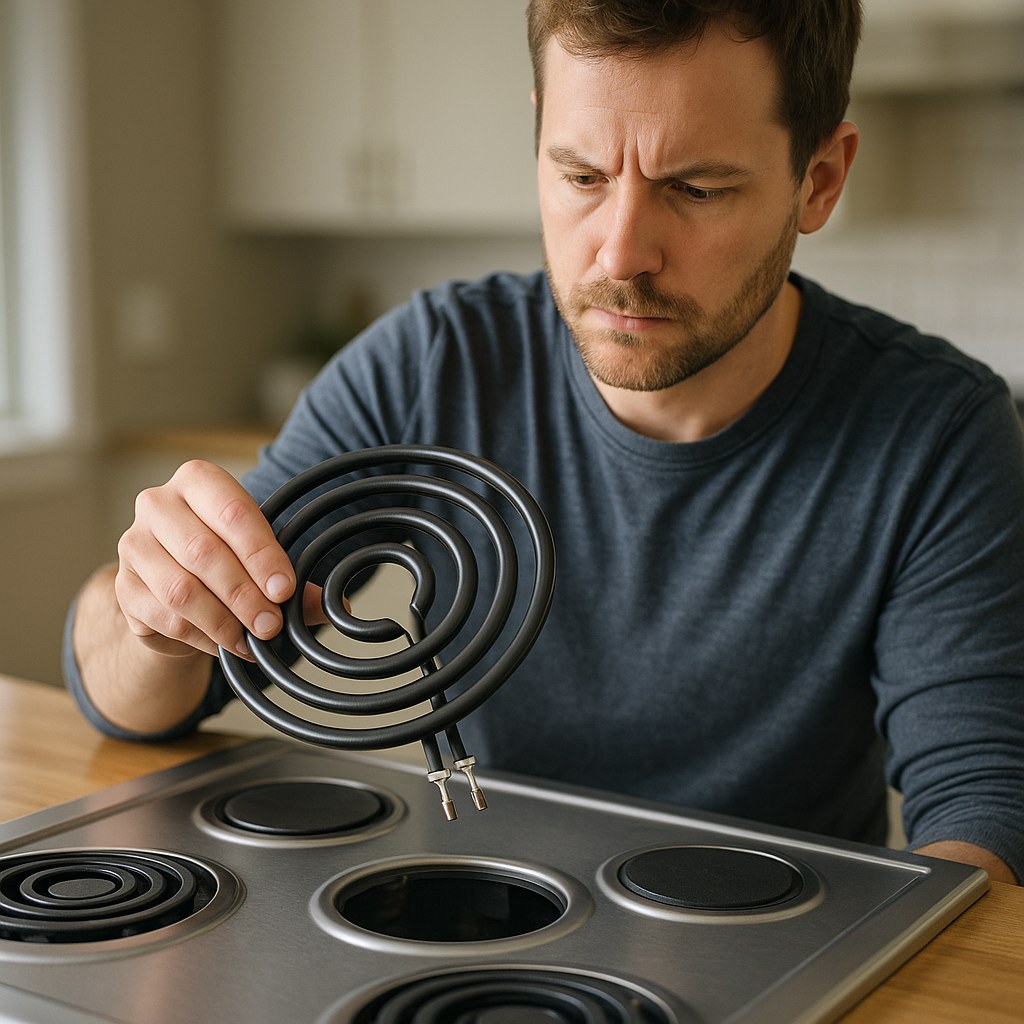
If the breaker trips no matter which element is connected, or even with no elements connected, the problem lies elsewhere.
If you’ve completed these steps and the breaker still trips, the fault is likely internal to the stove’s wiring or controls. At this point, it's time to call an appliance repair technician.
Even though it cooks with gas, your stove’s igniters and controls need electricity.
Rule Out an Overloaded Circuit: Just like with an electric stove, check if other appliances are sharing the circuit. Unplug them, reset the breaker, and try to light one of the burners. If the breaker holds, you need to dedicate that circuit to the stove. If it still trips when the igniters start clicking, continue troubleshooting.
Check the Breaker Itself: Listen for buzzing or feel for heat at the breaker panel, as described above. If you notice these signs, the breaker is likely faulty and needs an electrician to replace it.
Clean the Burner Igniters: Spills, food debris, or even moisture from cleaning can get down into the burner assembly and cause a short in the igniter.
Often, this simple cleaning is all that’s needed. If the breaker holds, you've fixed it! If it still trips, the problem is likely a faulty spark module (the component that sends voltage to all the igniters). Replacing this part is a job for an appliance repair technician.
DIY troubleshooting is great, but it's essential to know your limits. Here’s a simple breakdown of who to call:
Call a Licensed Electrician if:
Call an Appliance Repair Technician if:
According to data from HomeAdvisor, hiring an electrician for a diagnosis and simple repair like replacing a circuit breaker typically costs between $100 and $300. An appliance repair visit will likely have a diagnostic fee of around $75 to $150, with the final cost depending on the parts and labor needed for the repair.
Fixing a stove that trips a circuit breaker can feel daunting, but by following these steps, you can safely identify the source of the problem. Whether it's a simple fix like clearing a circuit or a more involved repair, you now have the knowledge to move forward confidently.
For more expert guides, personalized maintenance reminders, and a direct line to vetted professionals in your area, download the Casa app today. We're here to help you tackle any home challenge, big or small, and keep your home running smoothly.