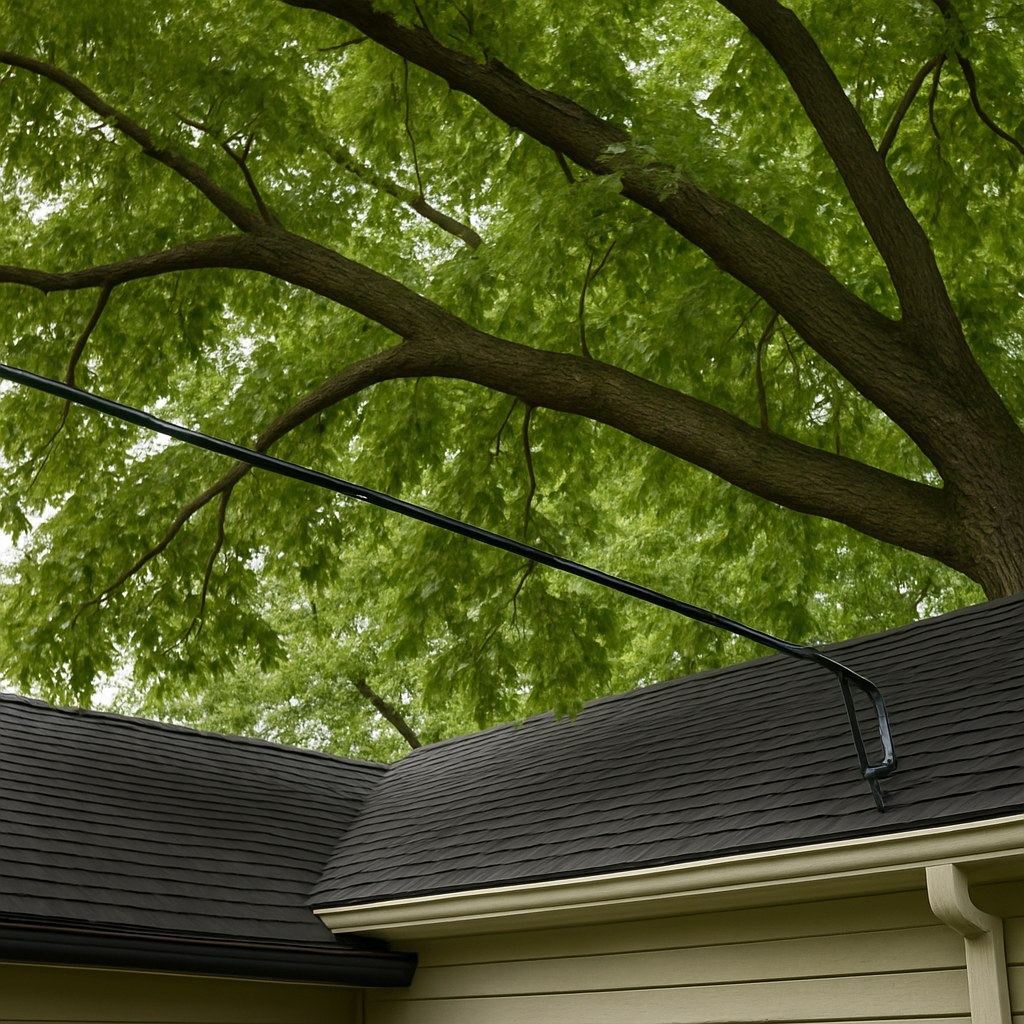
There are few things more unsettling for a homeowner than looking up and seeing a massive tree branch looming over your roof or tangled in the power lines. It’s a common problem, but that doesn’t make it any less stressful. One bad storm could bring that branch crashing down, causing thousands of dollars in damage, power outages, or worse.
But don't panic. While this situation requires immediate attention, tackling it safely is all about following a clear, methodical process. You need to know who is responsible, what you can safely handle yourself, and when it’s absolutely necessary to call in a professional.
Think of us as your expert on the line, walking you through this. We’ll help you assess the danger, understand your options, and make the right call to protect your home.
The Golden Rule: Safety Above All Else
Before you even think about grabbing a saw or a ladder, your first and most important step is to assess the situation from a safe distance. This is especially critical when power lines are involved. Electricity can arc—or jump—from a line to a nearby object, like a metal pole pruner or even a damp branch. This makes trimming near power lines one of the most dangerous home maintenance jobs you could ever attempt.
So, let's start with the most critical question.
Step 1: Assess Power Line Proximity
Stand on the ground in a safe spot where you have a clear view of the tree and any nearby power lines. Your only job here is to observe.
Ask yourself: Are any tree branches within 10 feet of an overhead power line?
How do you estimate 10 feet? A good rule of thumb is to visualize a standard car—they’re typically longer than 10 feet. If a branch is closer to the power line than the length of a car, consider it a serious hazard.
- If YES, the branches are within 10 feet of power lines: STOP. Do not proceed with any DIY work. This is not a suggestion; it’s a critical safety directive. Jump to the section below titled "Branches Near Power Lines: A Job for the Professionals."
- If NO, the branches are a safe distance from all power lines: Great! You can proceed to the next step of our assessment. Jump to the section titled "Branches Over Your Roof (But Clear of Power Lines)."
Branches Near Power Lines: A Job for the Professionals
If you've determined that branches are threatening power lines, you've already done the most important part: identifying a serious electrical hazard. Your next step is to figure out who is responsible for fixing it.
First, stay at least 20 feet away from the lines and keep any long metal tools, like ladders or pole saws, lowered and far from the area.
Next, you need to identify who owns the lines.
- Utility-Owned Lines: These are the primary lines that run from the large utility poles on the street to the service mast on your roof.
- Privately-Owned Lines: Sometimes, a secondary line might run from your house to a detached garage, a workshop, or a yard light. These are typically your responsibility.
If you’re unsure, look for a tag on a nearby utility pole or check your latest electricity bill to identify your service provider.
When to Contact Your Utility Company
In most cases, the power lines running along the street and to your home are owned and maintained by the public utility company. They have a legal responsibility and a vested interest in keeping these lines clear to prevent power outages.
- Find the Right Number: Look on your utility bill or the company’s website for a specific phone number for "tree trimming" or "vegetation management."
- Make the Call: Provide your service address and clearly explain that you have tree branches growing within 10 feet of the main power lines.
- Get a Reference Number: Ask for a reference or ticket number for your request and inquire about the estimated timeframe for a crew to come out and assess the situation.
The utility company will dispatch a specialized, line-clearance-certified crew to trim the branches safely. The best part? This service is almost always free.
When to Hire a Power-Line Certified Arborist
If the utility company informs you that the lines are private property (e.g., the line running to your garage), or if for some reason they will not service the tree, you will need to hire a professional.
But not just any tree service will do. You must hire an ISA Certified Arborist who is specially trained and insured to work near power lines.
- Search Correctly: Use search terms like “ISA certified arborist qualified for line-clearance” in your area. The International Society of Arboriculture (ISA) website is the best place to find and verify certified professionals.
- Verify Credentials: Ask for their ISA certification number and proof of liability insurance that specifically covers work around energized power lines.
- Get a Written Estimate: The estimate should clearly outline their safety procedures for working near power lines.
Never, ever hire someone who is not certified and insured for this specific, high-risk work.
Branches Over Your Roof (But Clear of Power Lines)
If you've determined there's no immediate power line risk, you can now focus on the branches overhanging your house. The next decision point is whether you can handle this yourself or if you still need to call a pro. This depends on three things: ownership, branch size, and accessibility.
1. Do You Own the Tree?
First, confirm the tree is actually on your property. Look for property line markers like fences or survey stakes. If you're unsure, consult your property survey or your county's GIS map online.
- If you own the tree: You are responsible for its maintenance.
- If the tree is on a neighbor’s property or on city property: You don’t have an automatic right to start cutting. You’ll need to get permission first. (More on that in a bit!)
2. Is This a DIY-Sized Job?
Even if you own the tree, not all pruning is safe for a homeowner. The key question is:
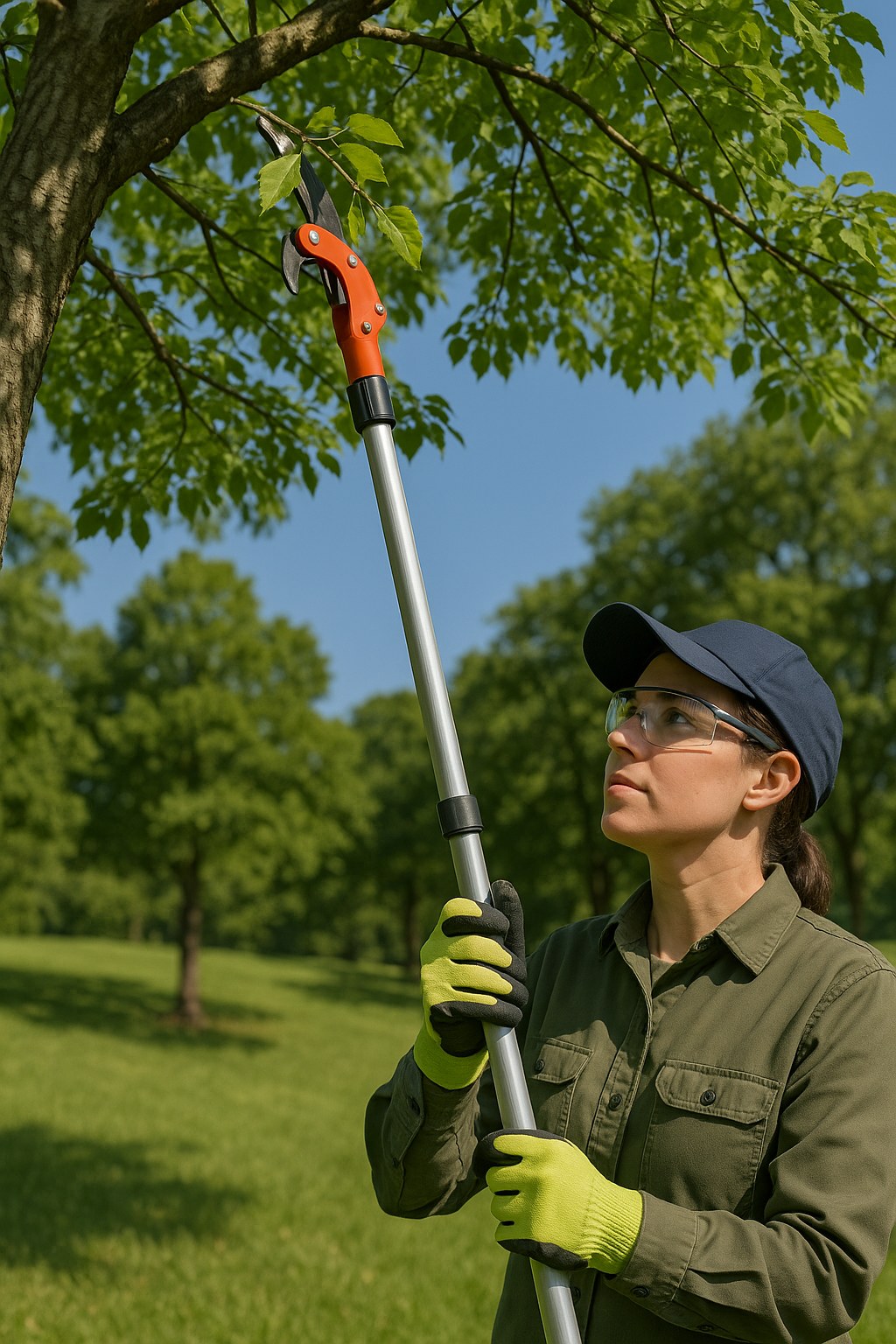
Is every branch you need to cut 2 inches or less in diameter AND easily reachable from the ground with a telescoping pole pruner?
- If YES: This is likely a manageable DIY project. Head to our guide on "How to Safely Prune Overhanging Branches Yourself."
- If NO: If any branches are thicker than 2 inches, or if you would need to get on a ladder or the roof to reach them, this is a job for a professional arborist. Ladders and chainsaws are a notoriously dangerous combination, and the risk of a heavy branch falling unpredictably on your roof is too high.
How to Safely Prune Overhanging Branches Yourself (DIY Guide)
If you've determined your situation is safe for a DIY approach, follow these steps carefully to protect yourself, your property, and the health of your tree.
Tools & Safety Gear:
- Safety glasses or goggles
- Hard hat
- Thick leather gloves
- A high-quality telescoping pole pruner
The Process:
- Clear the Drop Zone: Move any patio furniture, grills, planters, or vehicles from the area directly beneath the branch. Make sure no people or pets are in the vicinity.
- Plan Your Cuts (The 3-Cut Method): Never try to remove a branch with a single cut. This can cause the branch to break unexpectedly and tear a strip of bark down the trunk, harming the tree. Use the professional three-cut method:
- Cut 1 (The Undercut): About 6-12 inches away from the main trunk (the "branch collar"), make a cut on the underside of the branch. Cut about one-third of the way through. This prevents the bark from tearing.
- Cut 2 (The Relief Cut): Move about an inch farther out from your first cut (away from the trunk) and make a cut from the top. Cut all the way through. The majority of the branch will now fall safely to the ground without tearing the bark.
- Cut 3 (The Final Cut): You are now left with a short stub. Make your final cut just outside the branch collar—the slightly swollen area where the branch meets the trunk. This allows the tree to heal properly.
- Work in Manageable Sections: If you’re removing a long branch, cut it down in several smaller, lighter sections rather than trying to drop the whole thing at once.
- Clean Up: Stack the fallen branches and dispose of them according to your local green waste regulations.
When and How to Hire a Certified Arborist for Non-Utility Work
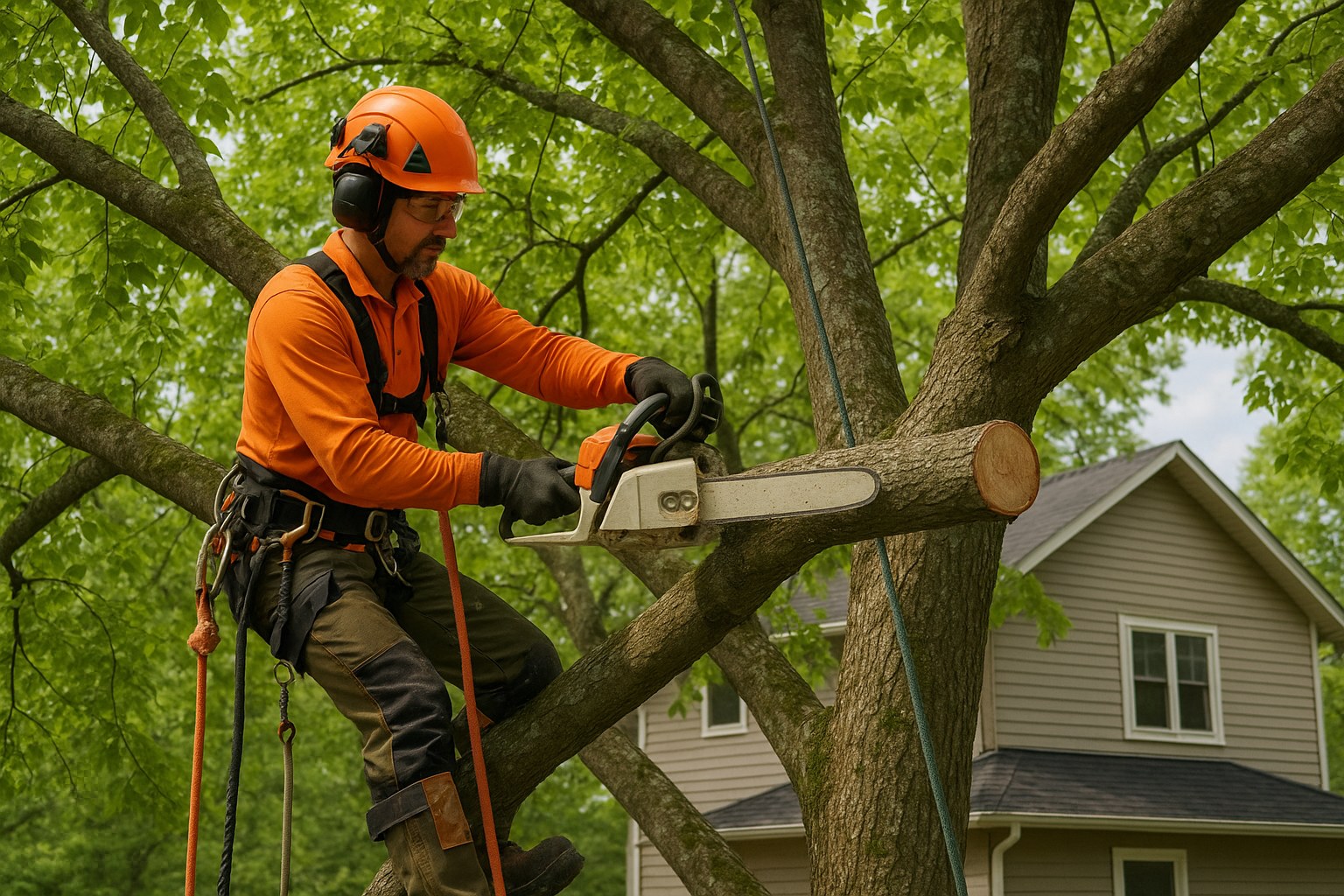
If your branches are too big, too high, or you’re simply not comfortable doing the work yourself, hiring a professional is the smartest and safest choice.
Finding the Right Pro:
- Look for ISA Certification: As mentioned before, the International Society of Arboriculture (ISA) is the gold standard. A certified arborist has proven expertise in tree health, safety, and proper pruning techniques.
- Confirm Insurance: Ask for proof of both liability insurance (to cover any damage to your property) and worker's compensation insurance (to cover their employees if they get hurt on your property).
- Get Multiple Written Quotes: Obtain detailed written estimates from at least two or three different companies. The quote should specify exactly what work will be done and the total cost.
What About a Neighbor's Tree?
If the troublesome branches belong to a neighbor, proper etiquette and legal prudence are key. While many jurisdictions allow you to trim branches that cross over onto your property line, it's always best to speak with your neighbor first.
- Have a Friendly Conversation: Explain your concerns about the branches overhanging your roof. They may be unaware of the issue and happy to take care of it themselves.
- Send a Formal Request: If a conversation doesn't resolve the issue, send a polite, written request via certified mail. Explain the hazard and state that you intend to have the overhanging portions pruned. This creates a paper trail and protects you legally.
- Hire a Pro: When trimming a neighbor's tree, it's always wise to hire a certified and insured arborist to ensure the work is done properly and without harming the tree, which could make you liable.
How Much Does Professional Tree Trimming Cost?
The cost of hiring an arborist can vary widely based on the tree's size, location, and the complexity of the job.
- DIY Project Cost: If you need to buy tools, a good telescoping pole pruner can cost between $100 and $200.
- Professional Arborist Cost: According to Forbes Home, professional tree trimming typically costs between $200 and $760, with the national average around $460. Jobs that are complex or require specialized equipment (like those near power lines) can cost significantly more.
While it may seem expensive, this cost is a fraction of what you might pay for a new roof or electrical repairs after a branch falls.
Don't Wait for Disaster to Strike
Those overhanging branches are more than just an eyesore; they're a ticking clock. By following this guide, you can confidently and safely address the issue before it becomes a catastrophe. Assess the risk, know your limits, and never hesitate to call in a qualified professional when needed.
For everything your home needs, from DIY guidance to finding trusted, vetted professionals in your area, download the Casa app. We’re here to help you manage your home safely and effectively, one project at a time.